Our research group is primarily funded by industry to solve real-world problems arising from an incomplete physical understanding of the response of materials to dynamic stimuli. We have a wide range of interests including both reactive (explosive) and inert materials; materials which may be brittle (diamond), plastic (metals) or viscoelastic (polymers); materials that are solids or fluids, or in-between (granular beds).
We are interested in the processes that occur when materials are subjected to extreme conditions (pressure, temperature) and are taken beyond the limits of their endurance (yield, fracture, decohesion). We have a particular interest in granular and fibre polymer composites, and understanding processes such as damage at the micro-, meso- and macro-scale.
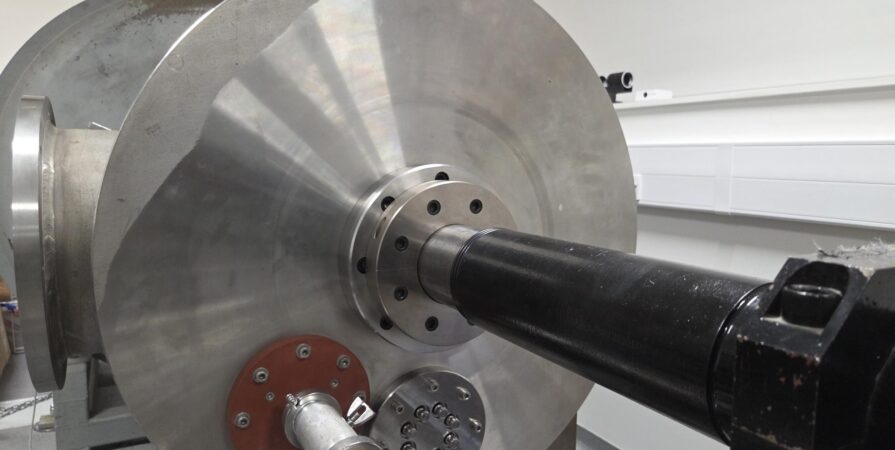
Typically the materials and conditions we wish to study are not readily accessible using off-the-shelf equipment. A large fraction of our effort is devoted to developing novel instrumentation and diagnostic techniques to elucidate the physics of the subjects described above.
We are a modestly sized, friendly, widely interdisciplinary yet highly collaborative research group. Each of us has a particular specialty, but we share interests and expertise – discussing ideas and lending a hand is central to our ethos. Our research often requires a broad understanding of science, and so students and staff tend to develop a working knowledge of quite a wide range of physics, chemistry, materials science and engineering disciplines. Our students come from a variety of STEM backgrounds. Some join us straight from undergraduate courses, while others are further into their professional careers (sometimes seconded from their existing roles, either full or part time).
As an industry-focused group, some of our research leads to real-world applications in a much shorter timescale than is usual for academia, and we aim to provide PhD students with the tools necessary to thrive whether they stay in academia or leave to work in industry after graduation. We have a high staff-to-student ratio, and offer significant hands-on support for students.
Industrial funding doesn’t mean you’re just collecting data for your sponsor – Our partners continue to work with us decade after decade because we can help them understand the underlying physics of a problem (and often the problem itself is not well defined). In this vein, we take care to design PhD projects such that our industrial and government partners offer guidance and motivation, without unnecessarily limiting freedom or flexibility to pursue interesting avenues of research.

We aim to understand dynamic processes in materials at a fundamental level, producing high quality experimental data and developing innovative techniques.
Our experimental facilities include world-class plate impact and ballistics labs, supported by material prep and characterization suites.
Our work brings together industry, academia and government to help solve some of the biggest challenges in materials physics. Browse some of our published work.
We offer research reviews in Part II and experimental research projects to Part III students, and typically admit two or three PhD students each year. Could you be one of them?
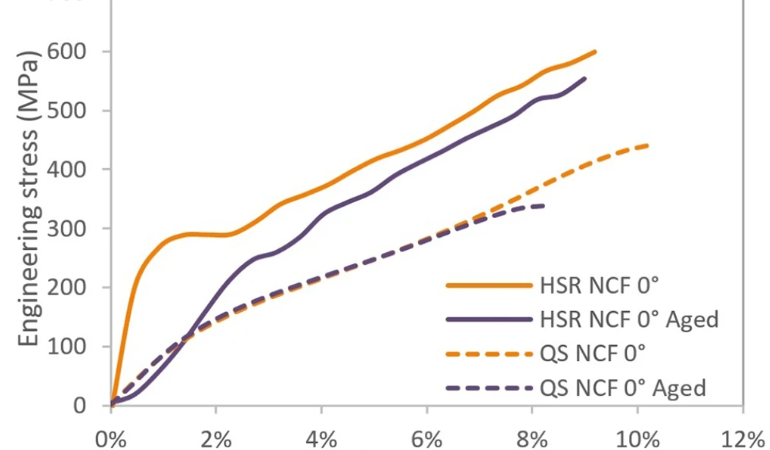
Fibre composites deform and degrade via different damage mechanisms. Rate sensitivity depends on factors such as fibre architecture and load orientation. Here, we argue that energy flux (i.e. power) may be more useful than "strain rate" for characterizing the speed of an experiment.
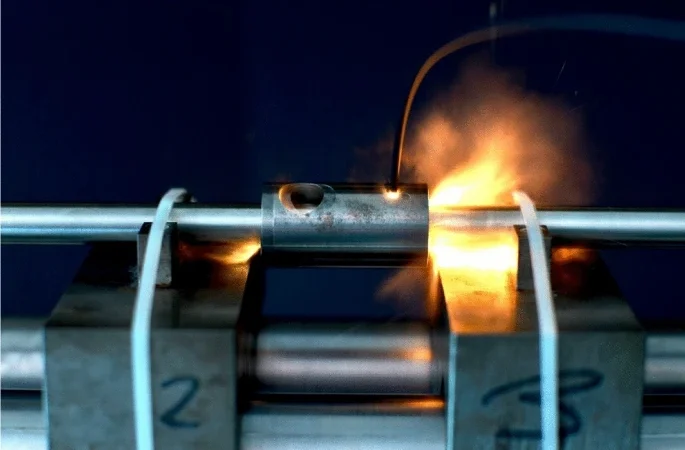
Initiation of energetic materials is a process still not well understood. This study shows that ignition can be achieved using a Split Hopkinson Pressure Bar, and considers the threshold for ignition with regards to pressure, total energy absorbed, and duration of loading.
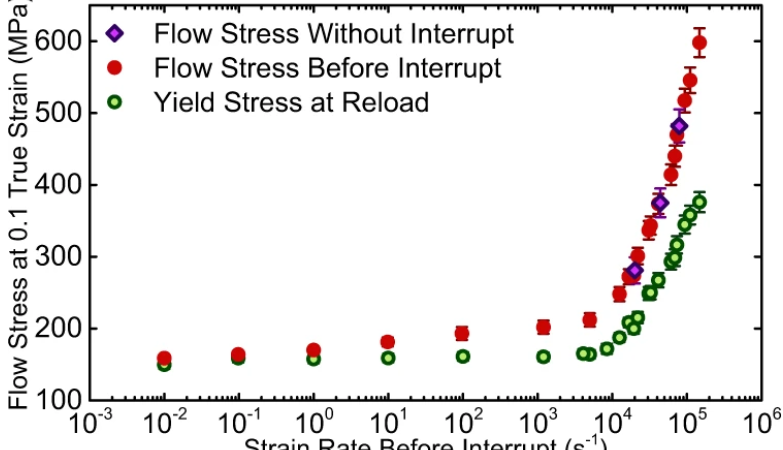
Metal plasticity is now known to occur in discrete events arising from the self-organisation of dislocations into ‘avalanches’ under applied stress. Here we extend avalanche plasticity to high strain rates, to explain the sharp uptick in the strength of copper above 10,000/s.